

Norwich Castle
Location
Castle Street, Norwich, NR1 3JU
About
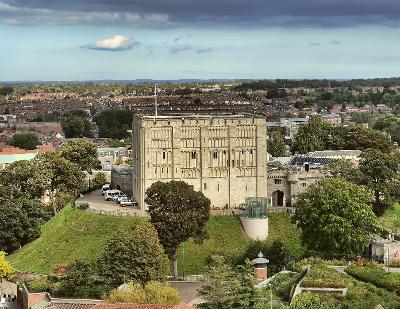
Soon after the Norman Conquest of 1066, William I ordered the building of a wooden castle on a purpose-made mound in the heart of Norwich. William's two sons, William II and Henry I, rebuilt the castle in stone. On its completion in the 1120s, the keep of the new castle at Norwich was likely the most elaborate and artistically sophisticated secular building in the country. Its splendour—and the royal attention—did not last long, and despite several royal visits in the subsequent centuries, the castle was neglected and gradually ceased to perform political functions. From the 14th to the 19th century the castle keep was used as the county gaol. The keep underwent many alterations during this time, including the loss of its internal walls, floors and roof. One of the most invasive alterations was the 1789-1793 construction of brick cell blocks inside the walls of the keep.

Between 1887 and 1894, the castle was converted into a museum, designed by Norwich architect Edward Boardman. Jeremiah James Colman was one of the most ardent supporters of the museum plan, and this support was part of his long campaign for public access to the historic buildings of Norwich. Boardman's son, also Edward and an architect, later married Florence Colman, the youngest of Jeremiah James' daughters. He collaborated with the Colman family to preserve other historic buildings in the city. The Colman family made an immense contribution to Norwich Castle Museum, donating extensive art and archaeology collections as well as funding further improvements, including the creation of the Colman Galleries, which were opened in 1951.
More information
The Colman's map webpages
The Colman's map webpages list
-
-
-
-
-
-
-
-
-
![]()
Norwich Castle
See more (Go to Norwich Castle) -
-
-
-


