

Betterment
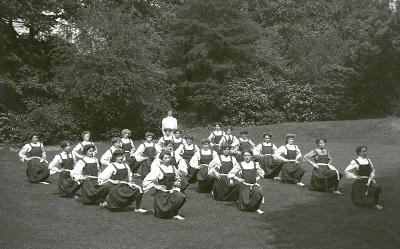
As devout nonconformist Christians, Jeremiah James and Caroline Colman lived by the values of 'faith, self-improvement and earnest recreation'. They were keen to bestow these values on their workers. Education was one of the means of achieving this. Schooling provision began at Stoke Holy Cross in the 1840s, and Jeremiah James himself taught workers' children there at Sunday school. A school for workers' children opened at Carrow in 1857 before moving to a new building in 1864. Besides reading, writing and arithmetic, the children learned practical skills such as modelling in clay, Venetian ironwork, gardening and beekeeping for boys, and basketry and domestic economy for girls.

In 1885 Carrow Men's First Day School opened, which, it was later claimed, succeeded 'by producing better men, better sons, husbands, fathers, workers, neighbours, and citizens.' First Day Schools, running on Sundays and available also to women, administered non-denominational religious instruction. Other types of adult training and development - or "betterment" - schemes were also available. Several times a week, young girls and women could attend lunch-time domestic classes, cookery and sewing among them. The company magazine ran regular prize competitions that put all these practical skills to use.

Sports and leisure were part of the provision for the workers, to ensure general contentment and wholesome instruction. The company magazine kept workers informed on the Social Scheme - a formal programme of activities held on almost every day of the year.

Carrow Works had its own cricket team and cricket ground at Lakenham, as well as its own football, draughts and swimming clubs. Other sports included physical culture for men and dancing and gymnastics for women.

The company's Club House had a lending library and reading rooms. Music classes and sessions for the company youth and adult bands and orchestras were also held at the club.

Diversions included events such as baby teas (for young mothers), occasional special receptions, lectures, concerts and workers' theatre performances. Regular outings were organised for all, and this included an annual outing for the workers' children and regular outings for the company horses, which were sent to Whitlingham at weekends.

All of the leisure provisions and welfare schemes constituted, as V. Morton put it, a 'living educational machine' that not only diverted from the daily hardships of labour, but also created an unbreakable bond with the company. 'The whole tenor of Carrow management was indeed to discourage union activity and industrial confrontation by educating workers to identify, not with each other, but with the firm.'


