

Jeremiah James Colman
The reluctant entrepreneur
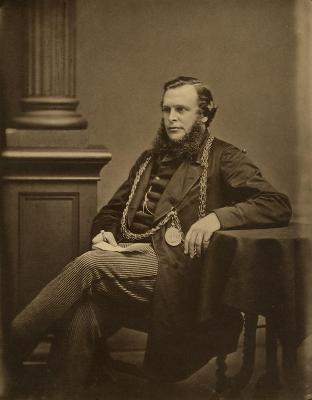
Jeremiah James Colman (1830-1898) was the one who propelled the J. & J. Colman business into fame and prosperity. His passion for collecting initiated the vast Colman collections of books, art and artefacts.

He was born in 1830 at Stoke Holy Cross as the eldest son of James Colman and Mary Colman (née Burlingham). Mary seems to have had a profound influence on her son, and throughout her life she was something of a moral compass to him.

Jeremiah Colman, the founder of the business, died in 1851, at which point young Jeremiah James was brought into the partnership with his father, James. When James died only three years later, Jeremiah James became the sole manager of the firm at the age of 23.

The correspondence between Jeremiah James and his mother from around that time reveals how much he relied on her reassurance that running a successful business would not come into conflict with his Christian conscience and his service of faith. Accordingly reassured, Jeremiah James pursued his role in the family business diligently and saw it as a way of leading a life of usefulness.

The direct beneficiaries of that diligence and desire to serve others were to be his workers and, of course, his family. The benefits also extended to the citizens of Norwich more widely, through Jeremiah James' active political life and philanthropy. His and his family's money and energy helped fuel many religious, educational and social movements, charities and organisations, including the City Mission, Young Men's Christian Association (YMCA), Young Women's Christian Association (YWCA) and the Salvation Army.

Jeremiah James was elected a city councillor in 1859, rose to sheriff in 1862, and then mayor in 1867. In 1871 he became a Liberal MP for the city.

A radical liberal from his youth, he campaigned for free trade, franchise reform, the advancement of liberty and the interests of the Nonconformists. He also attempted to remove rampant bribery and corruption from the political life of Norwich. He retained a firm hold of his company as well as a powerful influence on the goings-on in the city until his death in 1898. He died not long after the deaths of some of the people who were most important to him: his wife and son in 1895, and his mother just three days before him in 1898.
The Colman family
The Colman family list
-
![]()
Jeremiah Colman and James Colman
The founder (1777-1851) and the nephew
See more (Go to Jeremiah Colman and James Colman) -
![]()
Jeremiah James Colman
The reluctant entrepreneur
See more (Go to Jeremiah James Colman) -
-
-
-
-
-
-


