

The Colmans of Norwich
The family behind the brand
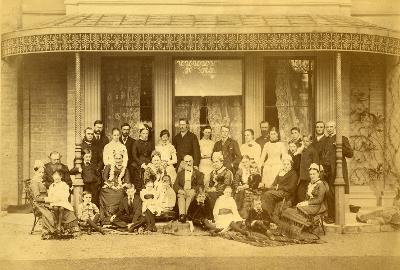
The Colmans were an old, pious, and fiercely independent country stock, Liberal in politics and Nonconformist in religion. They were thrifty, hardworking, enterprising and scrupulously honest. Sustained by these qualities, the family business at the mill at Stoke Holy Cross rode forward on the wave of industrial revolution
- J. Mardle, 'Jonathan Mardle writes on Jeremiah James Colman', Eastern Daily Press (15 September 1948)

Four generations of the Colman family feature in this story. The timeline spans the better part of the 19th century through to the 1940s, when the last but one of Jeremiah James Colman's children died. The family was a close-knit unit, bonded by a deeply embedded moral and religious ethic. The Colmans were committed Baptists, devoted to the principles of hard work and social usefulness as means to achieve a happy and fulfilled life.

The family's Nonconformist ethic of a strong sense of duty, diligence and ascetism proved helpful when it came to business. Indeed, their Christian values became reconciled —at times reluctantly—with commercial enterprise, moneymaking and self-advertisement. That said, it seems clear that money was not necessarily the primary motivator behind the Colmans' industrialist entrepreneurship. The family endeavoured to spread their wealth through philanthropic work and the pioneering welfare system in their factory. Family members played active parts in the political life of the city, campaigning for civic reforms and religious and civic liberties. Jeremiah James Colman led a campaign to use all historic buildings of Norwich for public benefit. Norwich Castle is just one example of a successful campaign: the building, which had been in use as a gaol, was purchased by the city of Norwich and opened as a museum in 1894. The conversion into a museum was entrusted to Edward Boardman, father of Jeremiah James' future son-in-law.

The connections and impacts that the family made within Norwich are many. The Colman men and women left their mark on the political, social and cultural life of the city, and many, like Ethel Colman, made history beyond the local area. Although the production of Colman's mustard left Norwich in 2019, the social legacy of the family remains. Their material legacy also continues, in the form of the buildings they cared for, and the collections they assembled of books, art and archaeology. Most of those collections made their way into the city's museums and libraries, often given in memory of a beloved family member.
The Colman family
The Colman family list
-
![]()
Jeremiah Colman and James Colman
The founder (1777-1851) and the nephew
See more (Go to Jeremiah Colman and James Colman) -
-
-
-
-
-
-
-


Objects in our collection
Browse our full collection to find a range of Colman's items and artefacts.
Archives and resources
Explore more about Colman's across a range of archives and online resources.


