

Make it
Mustard: from plant to plate
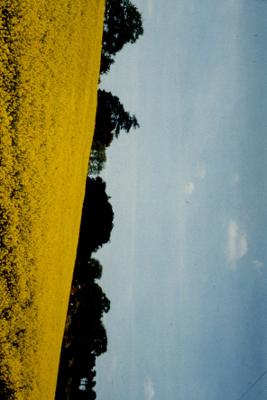
Mustard is a Eurasian plant of the brassica family, native to Britain and parts of Europe and Asia. Its name goes back to classical antiquity when a pounded seed of the plant was mixed with must (young, unfermented wine). This resulted in 'burning must' (mustum ardens), an intensely flavoured condiment which was used to accompany meat and vegetables, among other foods. Some of the most common mustard varieties are white mustard (Sinapis alba) and brown mustard (Brassica juncea). Seeds of white mustard have been found on archaeological sites of Roman Britain. Roman and medieval recipes used mustard to enhance the flavour of dishes. Ancient, medieval, and later herbalists and physicians were also interested in mustard, due to its various supposed health benefits.

The British are often credited with changing the technique for the processing of mustard seed. Milling the seed, as opposed to just crushing (or 'stamping'), resulted in smoother and more pungent mustard. In around 1720, a Mrs Clements of Durham is supposed to have popularised a fine mustard which she sold around the country, travelling to London twice a year to take orders. Her method involved grinding mustard seed in the same way as wheat was milled for flour. Mustard flour quickly became a commercial success.

Colman's mustard farming and production
The roots of the Colman family lay in farming. The founder of the business, Jeremiah Colman, was the son of a farmer. Jeremiah's decision to take up a milling business and his lease of a large mill at Stoke Holy Cross paved the way towards industrial success that culminated at Carrow, Norwich.
The mill was in the heart of what we might call "Colman country". At a number of villages scattered around this countryside - Wreningham, Ashwellthorpe, Rockland St. Andrew, Bawburgh - members of the family had been farming for many years. Jeremiah's move certainly represented the first step from agriculture to industry, but nevertheless it seems that the atmosphere of Stoke Mill must have been more that of a farm than a factory. The metamorphosis from farmers to industrialists can have been complete only when the industrial buildings went up at Carrow.

Farming remained crucially important to Jeremiah and his business, as mustard seed remained their most important raw ingredient. The family and company archives are full of business letters by and to Jeremiah James relating to the mustard seed trade, assessing the quality of seed from different traders and negotiating prices. The seed was bought at mustard markets or grown under contract with local farmers (contracting suppliers was an innovative approach at the time). As the business expanded, mustard seed was sought further afield and even imported when necessary.

Mustard seed was 'stamped' with giant pestles and mortars, then milled and sieved to the desired level of fineness. Colman's assortment of mustard powder included (in decreasing order of fineness) Double Superfine (DSF), Superfine, Fine and Seconds. The finest of the powders was achieved at Colman's with the use of silk sieves. The entire production process of the sieves - including the silkworms producing raw silk and the weaving of the silk - was done at Carrow Works. This is one of the most remarkable examples of the company's self-sufficiency in manufacturing.

Jeremiah's key innovation was blending white and brown mustard seed to increase the pungency of the mustard flavour. After blending, the traditional Colman's mustard reached (and still reaches) its consumer in form of a powder. The next step is for the consumer to prepare the condiment by adding their liquid of choice (e.g. water, milk, beer etc.). After waiting a few minutes for the full flavour to develop, the freshly prepared mustard is ready to enjoy.

Colman's farming: today and tomorrow
While Colman's mustard production is no longer based in Norwich, the company continues to work with local farmers to source mustard seed and ingredients for other products (including Norfolk-grown mint for mint sauce).

As part of their regenerative agriculture project, Colman's work closely with farmers to develop and employ sustainable farming practices.

Learn more about the Colman's and Unilever regenerative projects:
- Colman's regenerative agriculture journey on the Colman's website
- Unilever's regenerative projects on the Unilever website
- Colman's and Unilever working together on the Unilever website
Other Colman's products
Starch production
Between the 16th and early 20th century, starch was used in the laundry process to stiffen fabrics, especially collars, shirt sleeves, undergarments, and bed linens. Starch added smoothness and crispness to fabrics and aided hygiene by protecting the fabric from direct contact with sweat and dirt.
For almost the entire period of the Colman's tenancy at Stoke, starch was derived from crushing wheat. In 1840, commercial rival Orlando Jones patented a method of extracting starch from rice. This new product proved much superior to wheat starch, and Colman's was inspired to switch its own manufacturing methods. In 1849 Colman's patented its own method of manufacture of rice starch and introduced Patent No. 1 Rice Starch (later known as No. 1 White) into the market.

Laundry blue production
The idea behind laundry blue relied on an optical trick. As blue is a complementary colour to yellow, a yellowed white fabric which is tinted blue looks whiter to the eye. The blue tint created by the process of bluing was reversible, as blue could be washed out.
Blue was produced by Colman's in small units of various shapes. Among the self-explanatory balls, cubes, oblongs and cylinders of blue, the 'thumb'—the earliest manufactured unit of blue—deserves some attention. Thumbs were formed by pinching the ball of blue paste between finger and thumb. The resulting shapes (with visible fingerprints) were then stamped with the name of the firm. After drying, thumbs were highly polished before being sold loose and unwrapped. Thumbs began to be manufactured at Stoke and their production continued when the blue mill was opened at Carrow in 1862.

The earliest blue was produced by mixing natural indigo dye with starch. By 1872, the blue production process at Carrow used synthetic ultramarine imported from Germany (Prussian blue) in place of indigo. The product was named Azure Blue. In 1875, the company introduced a new, improved version named No. 1 Azure Blue. By then, the powder was compressed by machines and individually wrapped in mauve paper.

Blue was marketed for domestic consumption and the laundry trade. Its popularity as a household staple dipped in the years following the First World War. Part of the reason for this was the growing popularity of artificial silks and the introduction of improved linens which did not yellow, thus rendering bluing unnecessary. Within a few decades, laundry blue almost vanished from social memory.


