

Redefining and reimagining nature: Romanticism
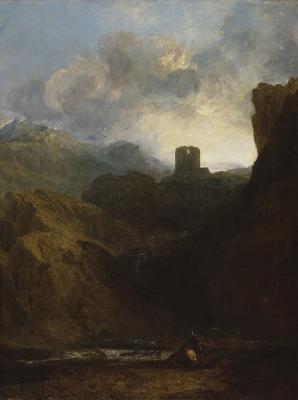
Prior to Romanticism, the focus had been on mankind's ability to master nature and use its resources for houses and industries. In the early 1700s people saw locations such as the Lake District as barren, pointless wastelands. Less than a century later, poets and artists, including Turner, would be inspired by these exact same landscapes, praising their untamed beauty. Developments in watercolours made it easier for artists to work outside, to capture landscapes more fully.

The 'sublime' was a new idea first debated in artistic circles in the later 1700s. 'Sublime' meant untamed wildness, vastness and irregularity in nature, qualities to induce unease and fear as well as awe. Mountains and cliffs were sources of sublime emotions. They emphasised human smallness in the face of huge natural features. As a Romantic artist Turner responded emotionally to nature, and portrayed sublime scenes like storms and avalanches.

Sublimity was contrasted with beauty, which was considered to revolve around harmony, grace and order. Sublimity was the first manifestation of the idea that one function of art can be to unsettle or disturb, and so was a significant step towards a modern view of art. Sublimity also supplied a framework for a new way of looking at nature, and became an important part of Romanticism.
Did you know?
'Romanticism' was a term coined at the beginning of the 1800s. It was not about romantic love, but was a concept applied to art, music and literature. It was characterised by a new emphasis on personal feelings and emotional responses to nature. In England, Turner led the way in the Romantic approach to art. His work aimed to elicit strong emotions in the viewer, from joy and excitement to fear and melancholy.
More webpages in the Turner and Changing Visions of Landscape section
More webpages in the Turner and Changing Visions of Landscape section list
-
![]()
Turner and the Thames: Walton Bridges
How Turner and other artists took inspiration from the River Thames and its bridges
See more (Go to Turner and the Thames: Walton Bridges) -
![]()
Redefining and reimagining nature: Romanticism
Romanticism and landscape art
See more (Go to Redefining and reimagining nature: Romanticism) -
![]()
Access, ownership, identity and survival
Issues around access to land and how this effects identity
See more (Go to Access, ownership, identity and survival ) -
![]()
Borders, maps and territories
How humans define and divide the landscape
See more (Go to Borders, maps and territories) -
![]()
Landscape, fragility, permanence and change
How environmental issues affect how we perceive landscapes
See more (Go to Landscape, fragility, permanence and change) -
![]()
Immersion in the landscape: emotional and spiritual wellbeing
The positive impact the natural landscape can have on our wellbeing
See more (Go to Immersion in the landscape: emotional and spiritual wellbeing) -
![]()
New narratives: inclusion and belonging
Feelings of belonging within the natural world
See more (Go to New narratives: inclusion and belonging)


