
Gallery Title
Gallery Title
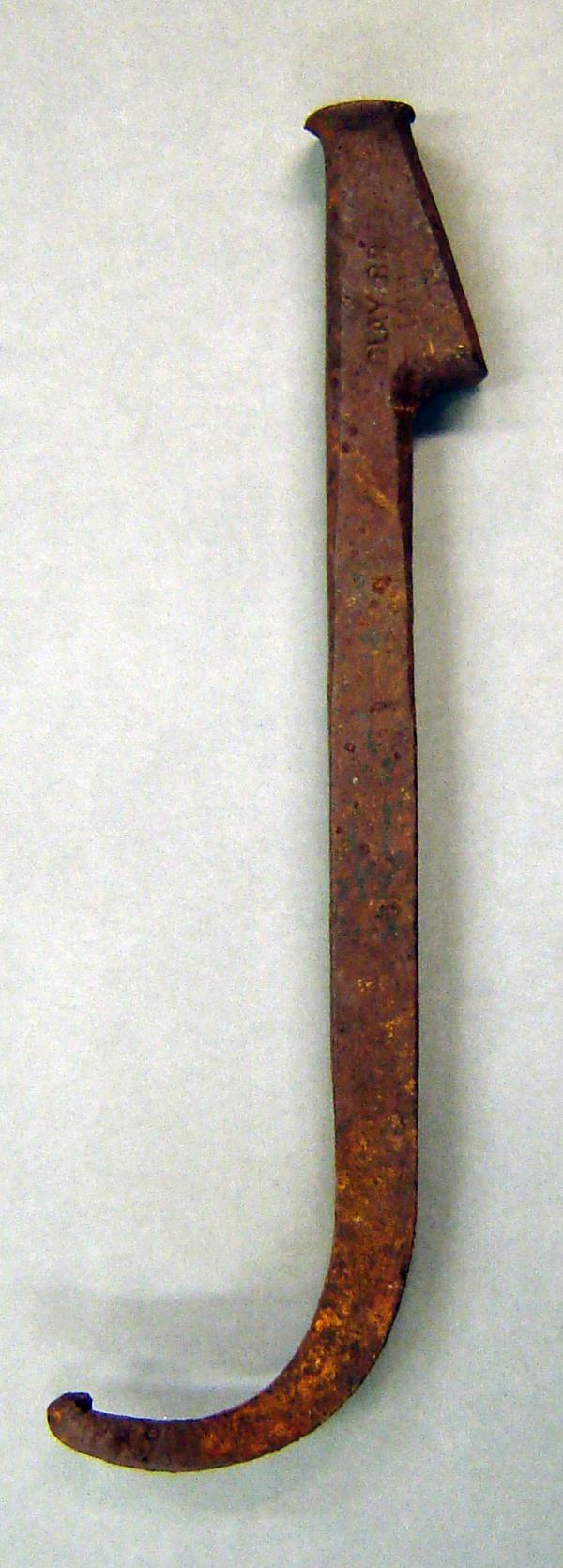
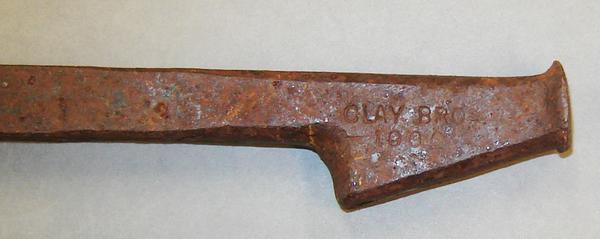
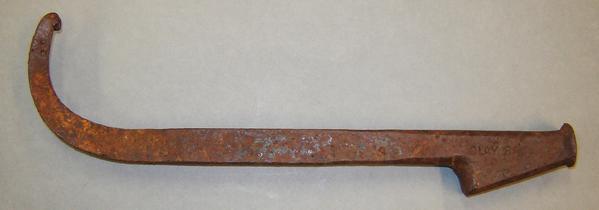
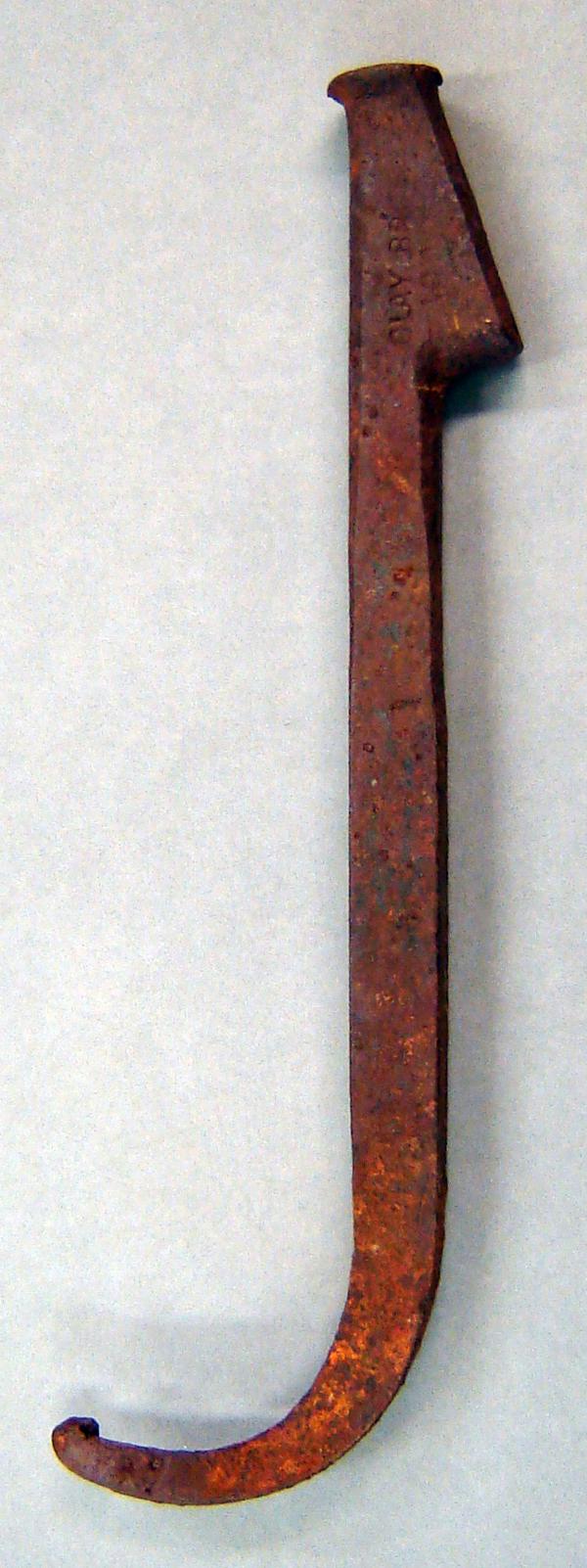
Iron Peg
Accession Number NWHRM : 6555.1
Description
British Army barbed wire entanglement iron peg, stamped Clay Bros. 1900, from the Karoo Veldt, South Africa.
Read MoreIron Peg
Barbed wire was invented in France and the United States in the 1860s to enclose animals. It was quickly adopted on the open ranges of America where cattle needed separating from farms, railroads and rival ranches and there was no convenient material to make hedges or fences. In 1898 Spanish forces used barbed wire defending the port of Santiago de Cuba from U.S. troops. The second Anglo-Boer war started a year later. Between 1899 and 1902 this was fought across the open plains of the South African Veldt. During recent campaigns such as those in the Sudan in the 1880s and 90s the British army had protected their camps with zarebas; enclosures made of thorny plants bound together.
The Boer War called for something more comprehensive. After the relief of besieged British garrisons and the defeat of the Boers' conventional armies, there followed two years of guerrilla warfare. Commandos, squadrons of mounted Boer rifleman, ranged freely across the Veldt. They struck isolated British posts and convoys of supply wagons and disappeared before stronger enemy forces arrived. The Commandos relied on local farmers for food and occasional shelter. British strategy was developed to gather all civilians into guarded, barbed wire enclosures called Concentration Camps and then try to drive the Boer troops towards fixed wire defences.
Given the vast expanse to be searched, this process took many operations and much time before the last Boer 'bitter-enders' went into exile. Meanwhile, thousands of imprisoned civilians had died from the insanitary conditions of the camps. This peg was used to anchor a post carrying the tensioned barbed wire.


