
Gallery Title
Gallery Title
Ararait
Accession Number NWHRM : 2742
Description
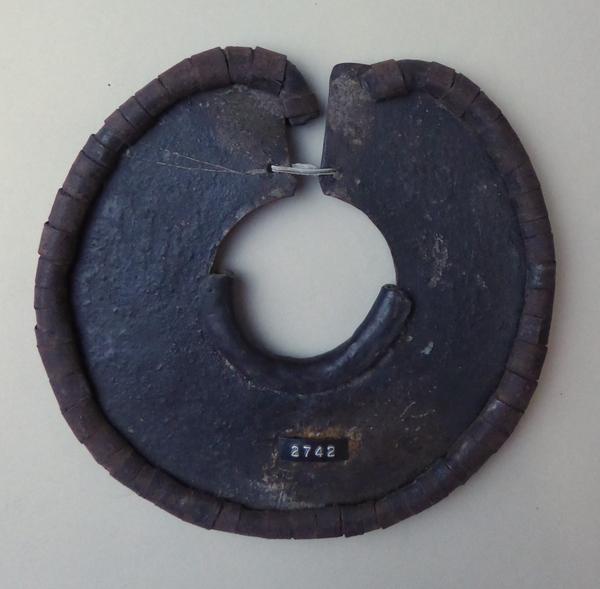
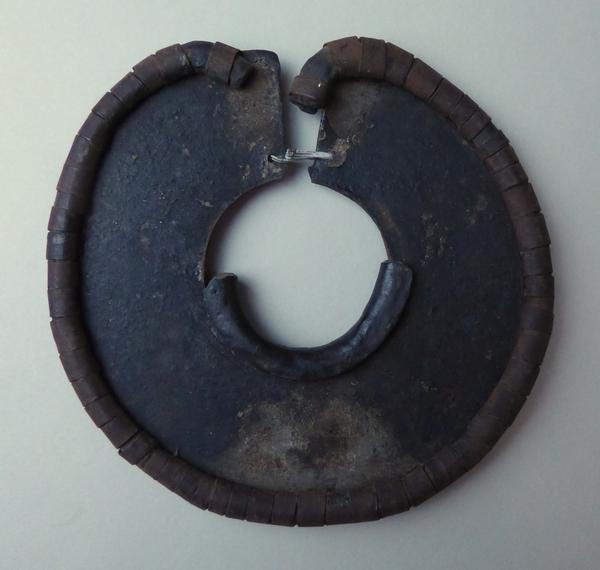
This ararait or wrist knife from East Africa was made by forging a piece of iron or steel into a flat rectangle. It was then bent to form the desired circular shape, with a void left in the centre for the wearer’s wrist and a gap so that the knife could be removed. To protect the wearer a cuff of rawhide was shaped to fit in the inner ring, part of which still remains. The sharpened outside edge is covered by a flexible leather sheath which could be quickly removed when needed. The knife is not only a defensive weapon but is an everyday tool used by both men and women. Because of the small central space it is possible that this example was worn by a female.
Read MoreArarait
This form of Knife is found among serval peoples including the Pokot, Karamojong and Turkana, and seems to be centred around the border areas of northern Kenya, Uganda and South Sudan. Examples from other collections show various shapes - some with pronounced elongated openings forming a more traditional blade like shape – and greater decoration – where both the blade and the sheath have been embellished. Adolfo Bartolomucci (2012) proposes that the ararait may be a form of currency. The British colonial authorities considered it to be a lethal weapon and banned its use in Kenya, however, the Turkana people continued to produce and wear the ararait, a practice that still continues.


