
Gallery Title
Gallery Title
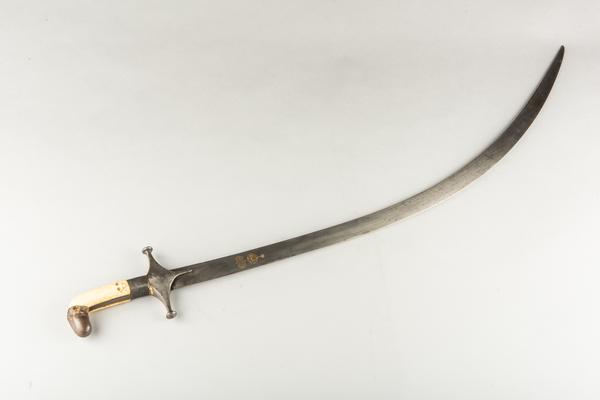
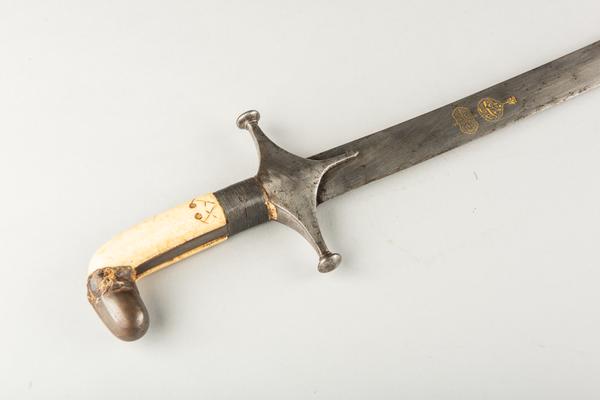
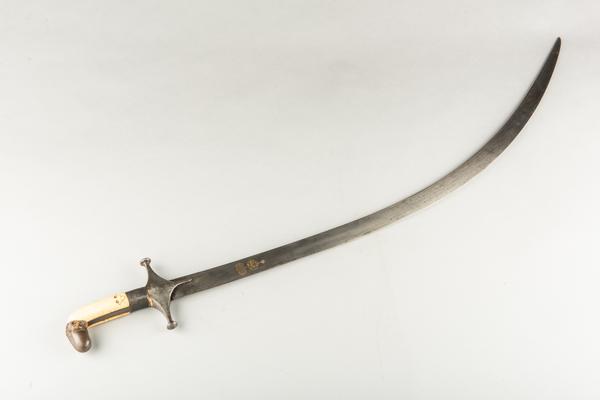
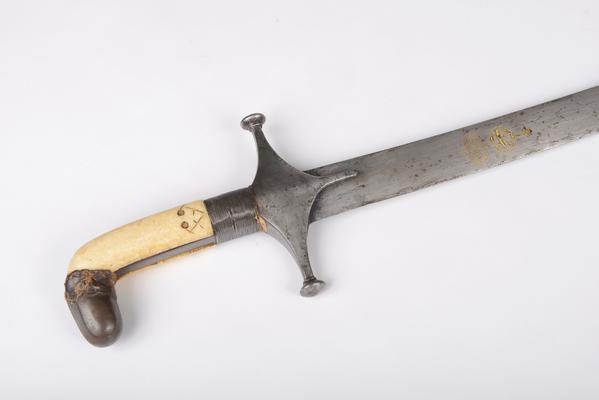
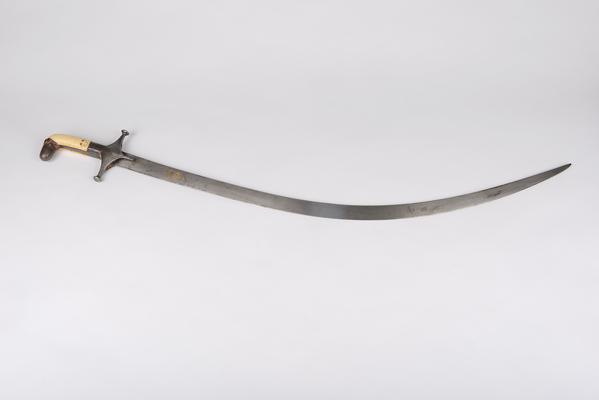
Afghan Sword
Accession Number NWHRM : 2735
Description
A Shamshir. The grip and pommel of the hilt are in pistol form. Cross-guard with button shaped finial and The hilt has downward pointing languets tapering to a point. Wirebound ferrule, ivory grips with 2 rivets alongside each other above V pointing towards guard. The hilt ends in a rounded metal covered pommel projecting in the direction of tOne of the weapons brought back by the 2nd Battalionafter the end of the Second Afghan War in 1880 when they were part of the relief force.
Read MoreAfghan Sword
Shamshirs originated in Persia, were taken up in India and from there also in Europe where they become known as scimitars. Sir Arthur Wellesley probably encountered them when campaigning in India in the early 19th century and wore one as the Duke of Wellington at the Battle of Waterloo in 1815. hHis opponent that day, Napoleon Bonaparte also carried a scimitar of the Mameluke variety from campaigning in Egypt. The style has since been widely adopted for general officers. Shamshir means ‘tiger’s claw’ because of the curved blade.


