
Gallery Title
Gallery Title
doll
Accession Number GRSRM : 1977.27.3
Description
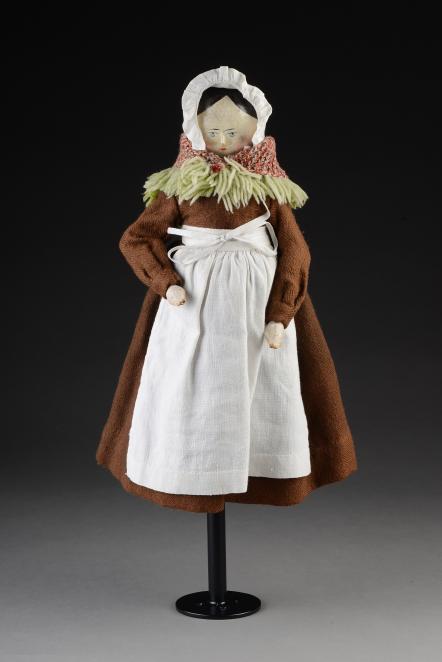
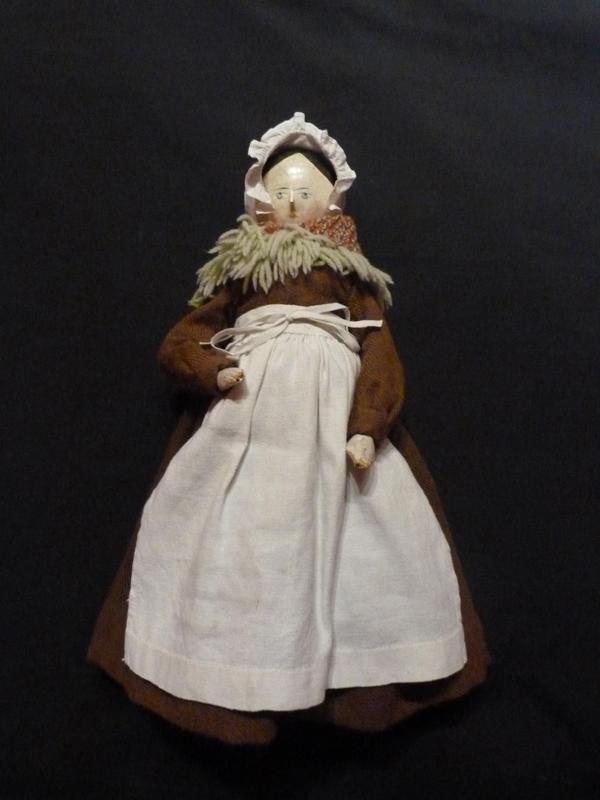
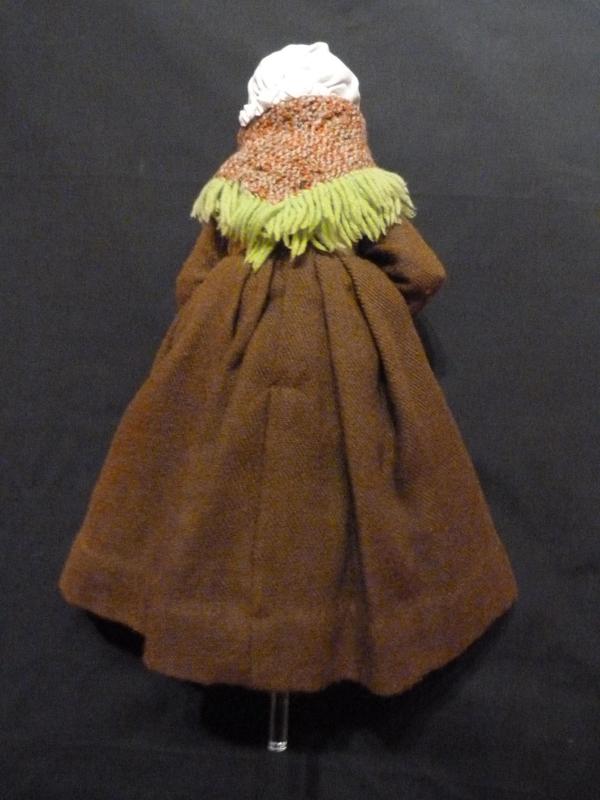
Doll. A wooden Dutch doll with a painted face and dressed as an elderly female inmate of Walsingham Union Workhouse at Thursford. She is wearing a brown wool dress, white apron, white bonnet and a knitted shawl of a later date. The doll was given to the donor as a Christmas present in 1900 by the inmates of the workhouse. It is thought that the doll was mass produced and clothing made by inmates of the workhouse.
Read Moredoll
Yes I do remember the dolls. They were standard German wooden dolls, probably from the Erzgeburg where they had been making them in millions for at least a hundred years by 1900. They were probably the cheapest dolls available. Queen Victoria had a great many, though much smaller, that she and her governess dressed as Theatre artistes as well as grand women. The smallest made was about 1/2in high and the largest about 3 feet. Strangers Hall has a beautifully made huge one from the early nineteenth century that I feel sure was a figure for advertising a dress shop as it is far too heavy for a child to carry. By 1900 their quality had deteriorated, hence affordable for a workhouse inmate. There is an article in, I think,The Girls Own Paper written in the 1880s, that says nobody wants to buy them anymore. Indeed the founder of Pollocks Toy Museum Mrs. Marguerite Fawdry, bought a barn full of these simple wooden dolls and made them available to visitors to Pollocks for many years. There are lots of children’s books and pictures that feature them, very often with no clothes as I’m sure they were sold undressed. I was interested in the fact they were dressed as inmates as I think they must be the last of that genre. There are several dressed in the beginning and middle of the 19th century, but are generally wax or china headed dolls in a particular charity school uniform.


